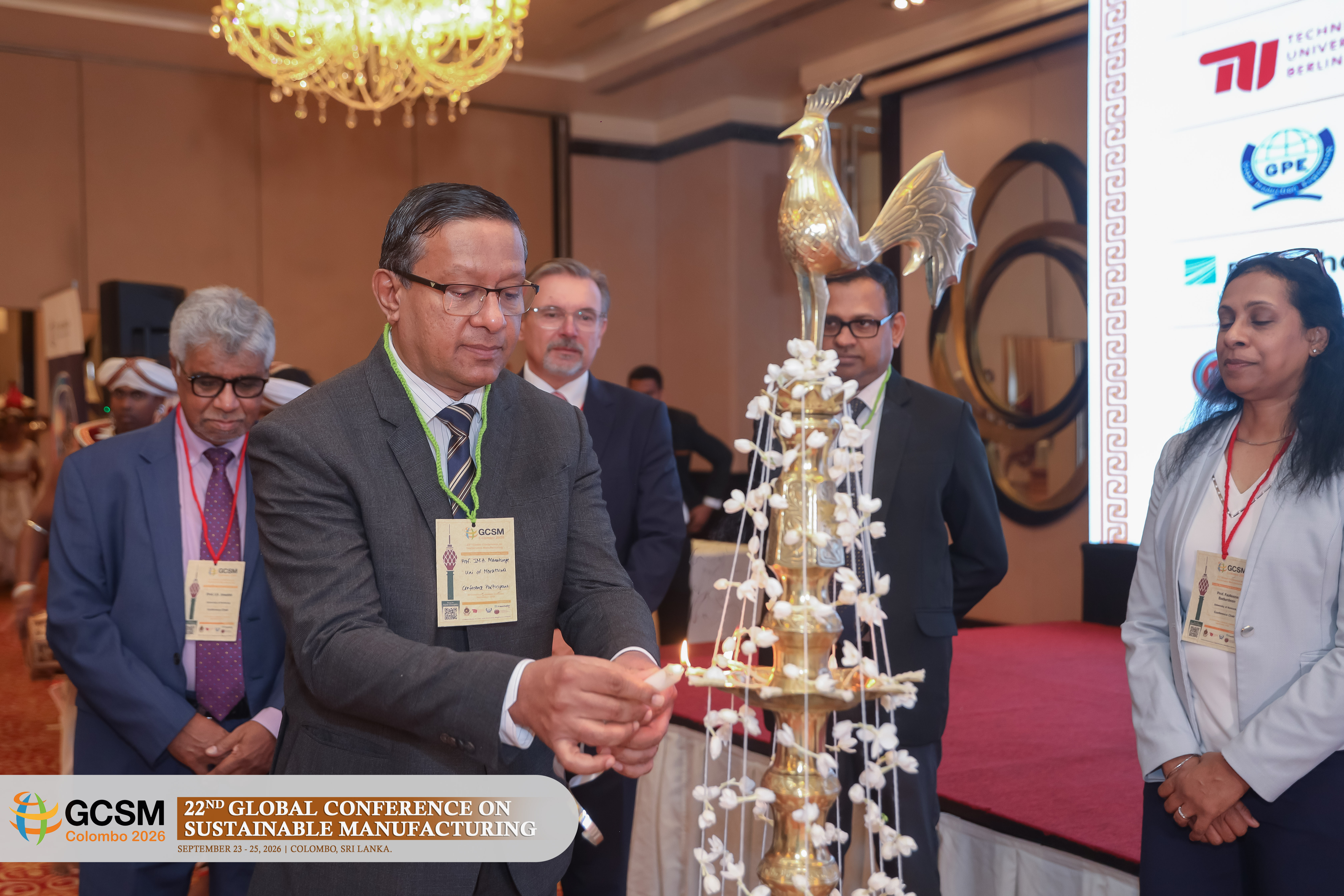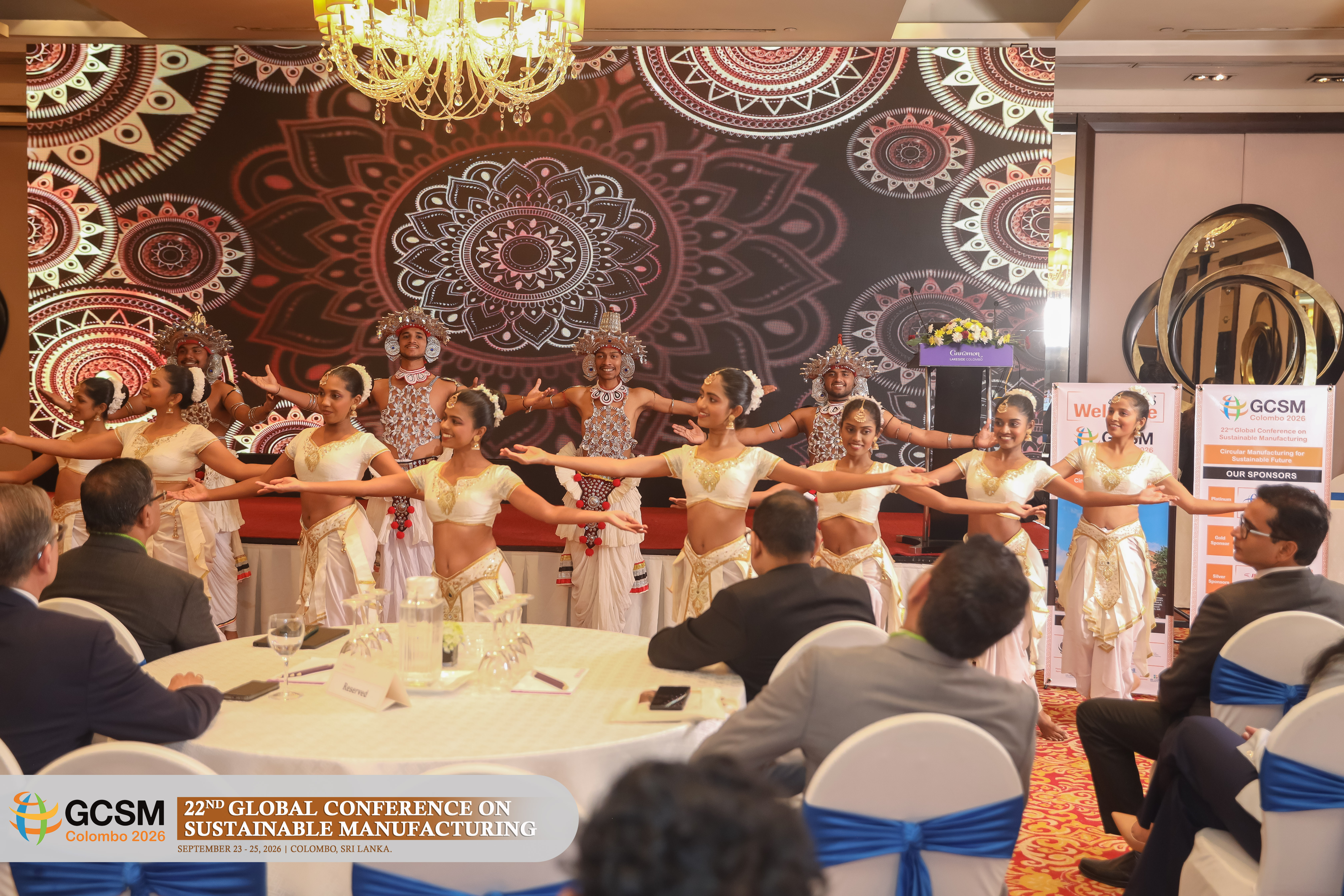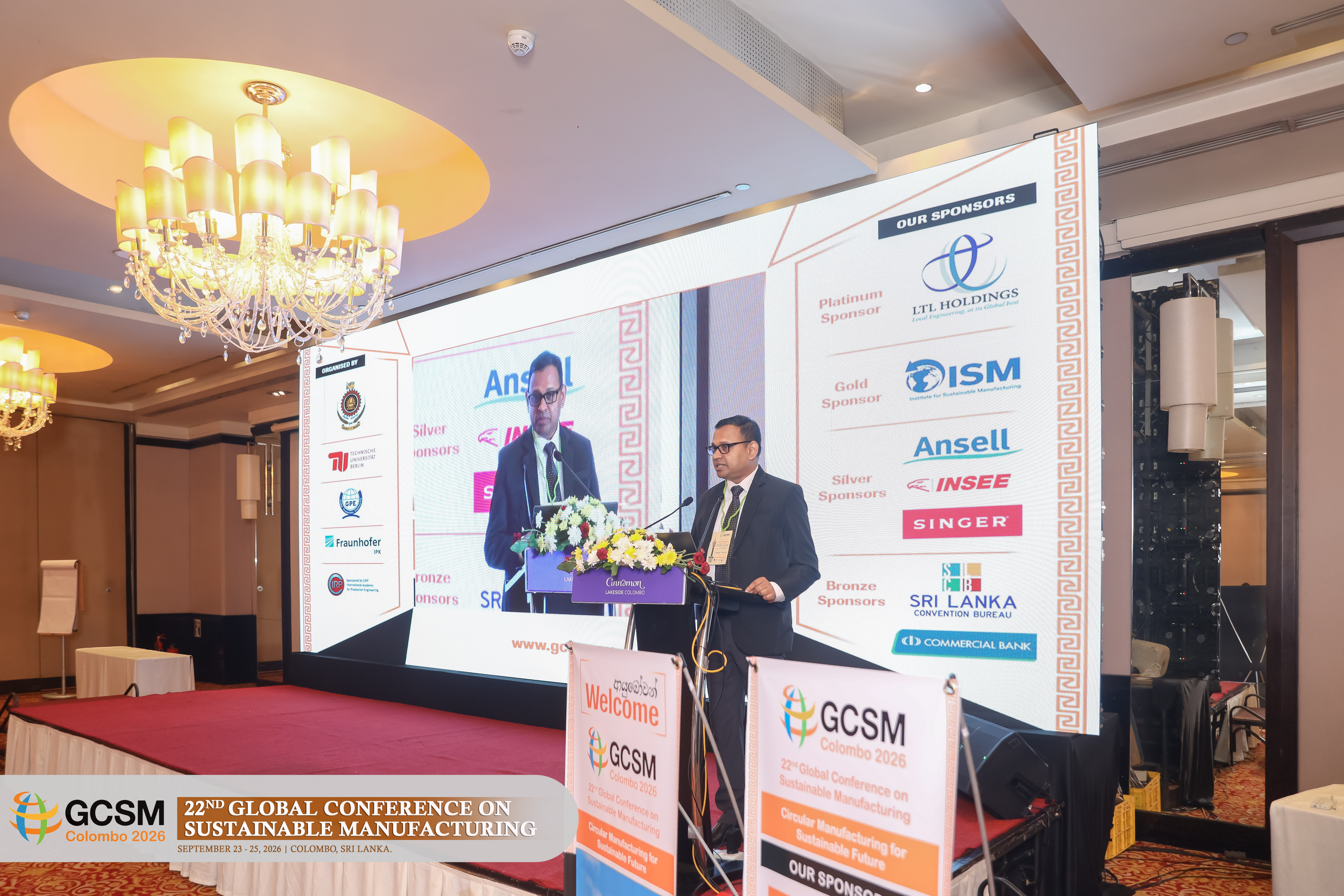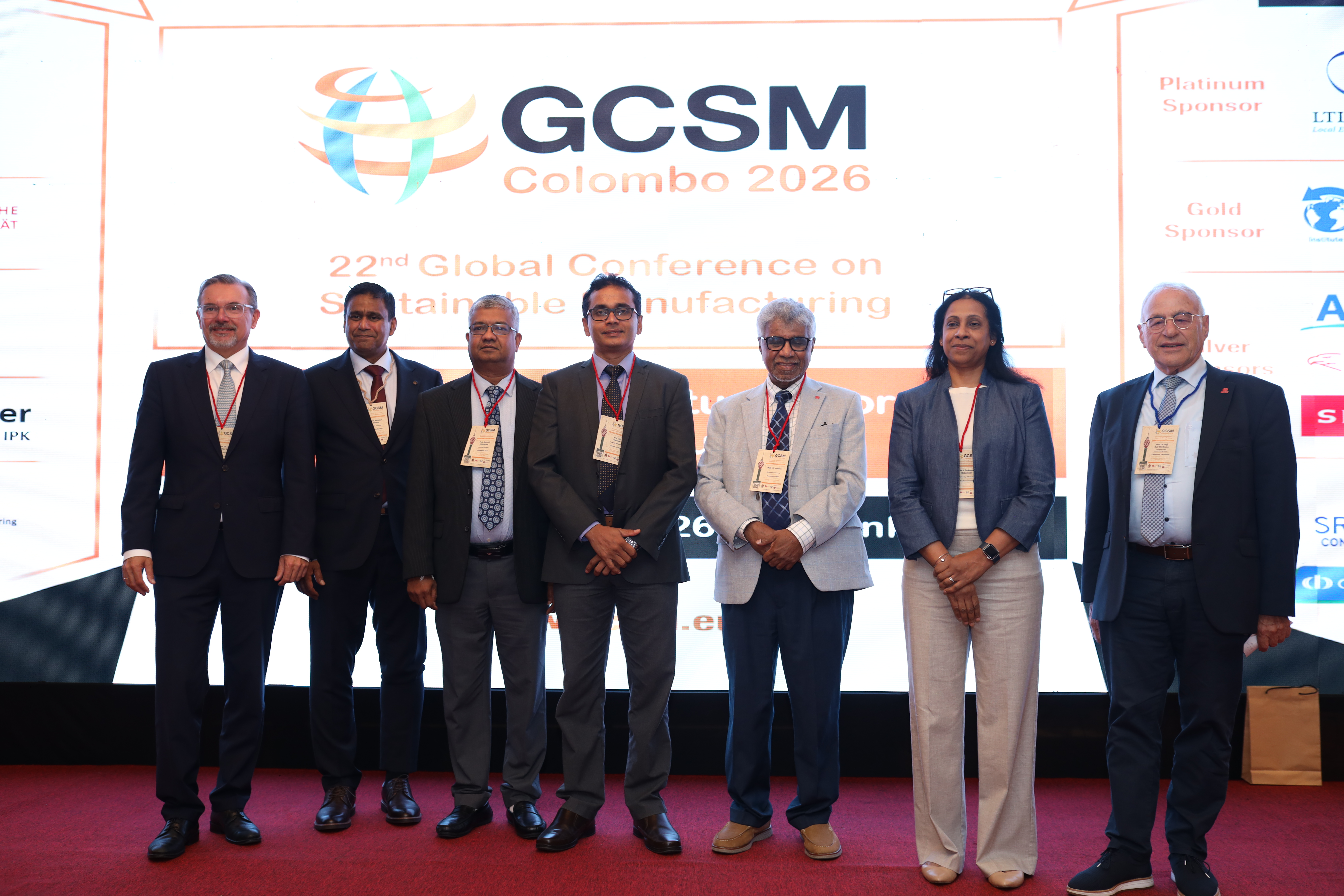
University of Moratuwa hosts the 22nd Global Conference on Sustainable Manufacturing (GCSM) 2026 in Colombo.
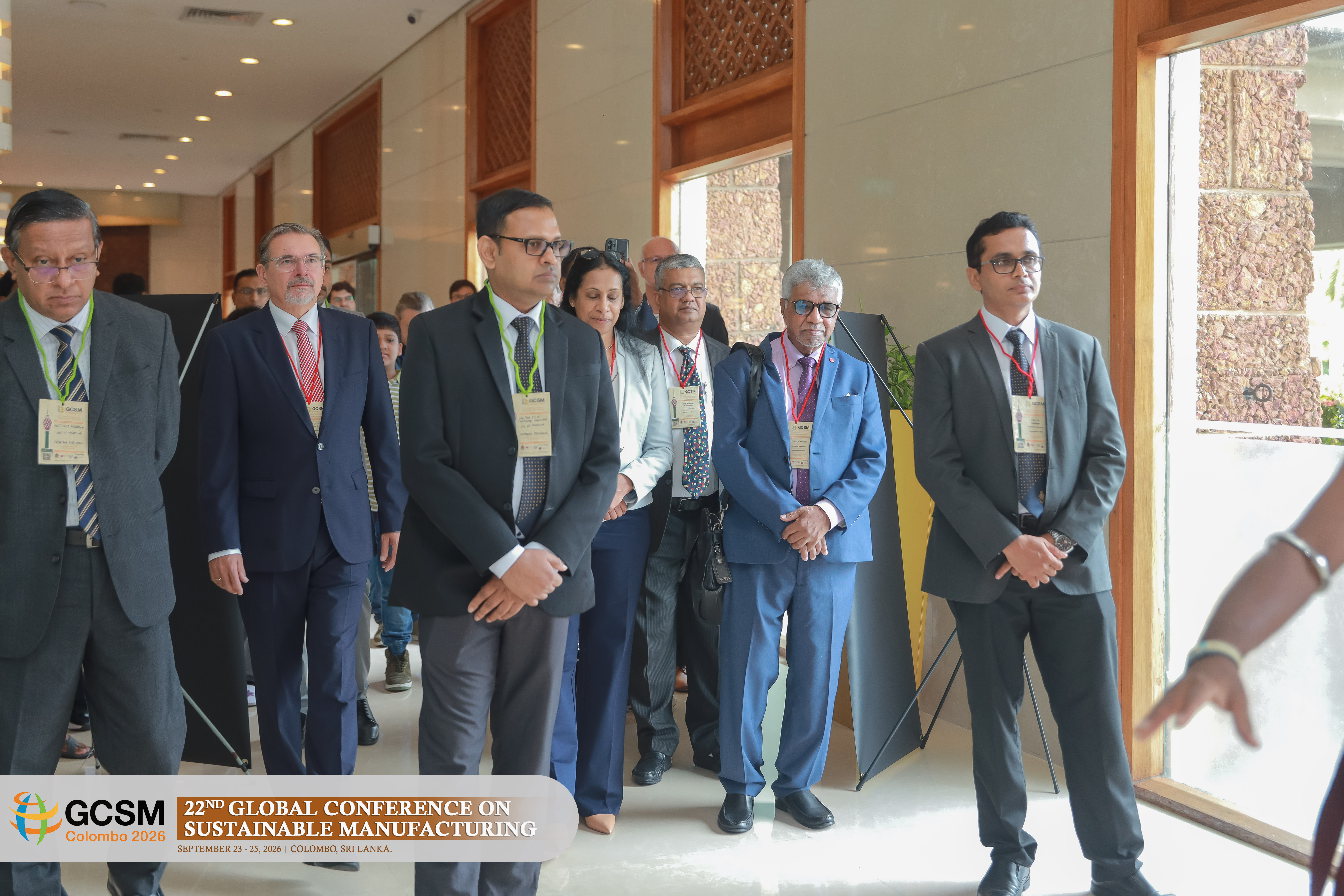
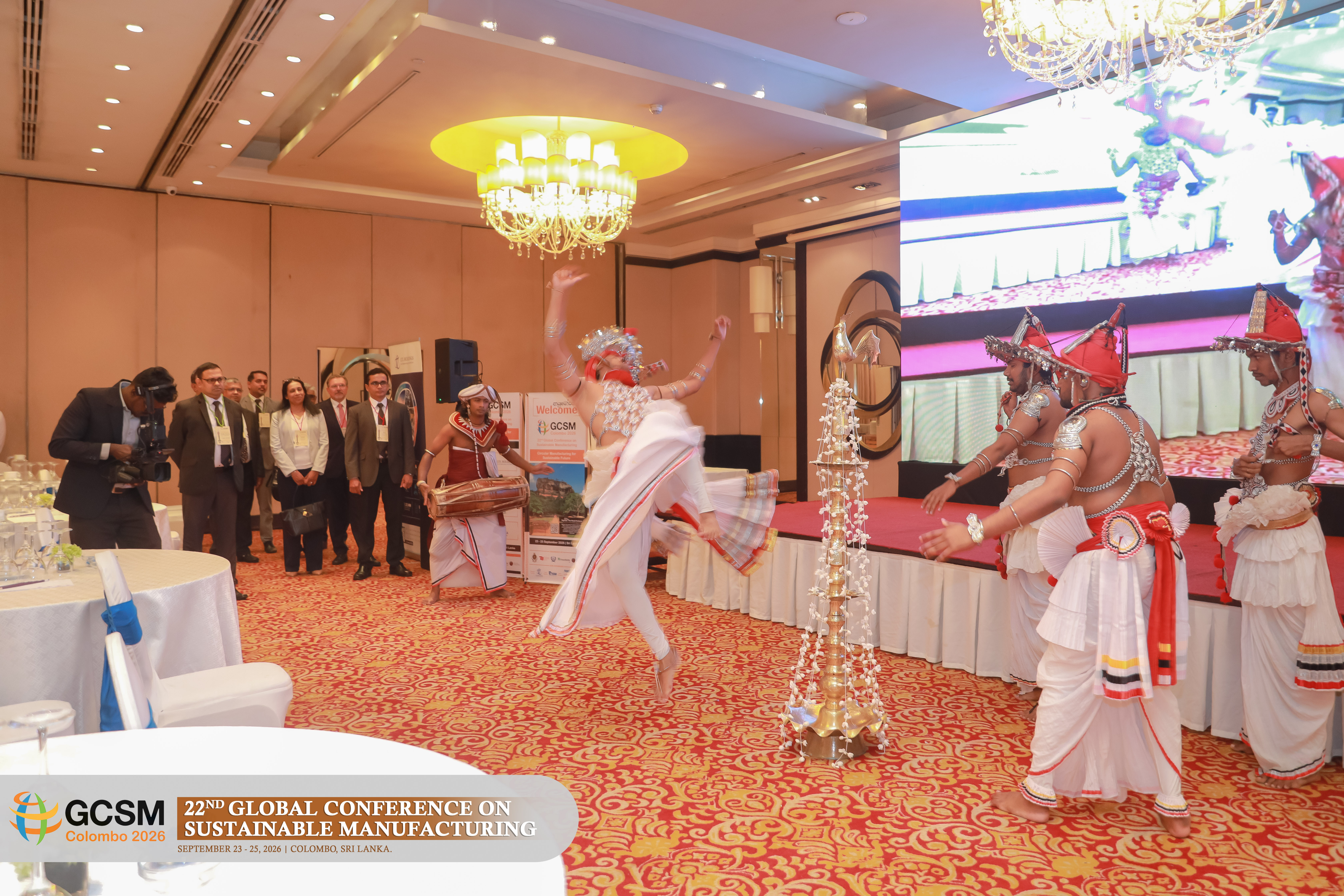
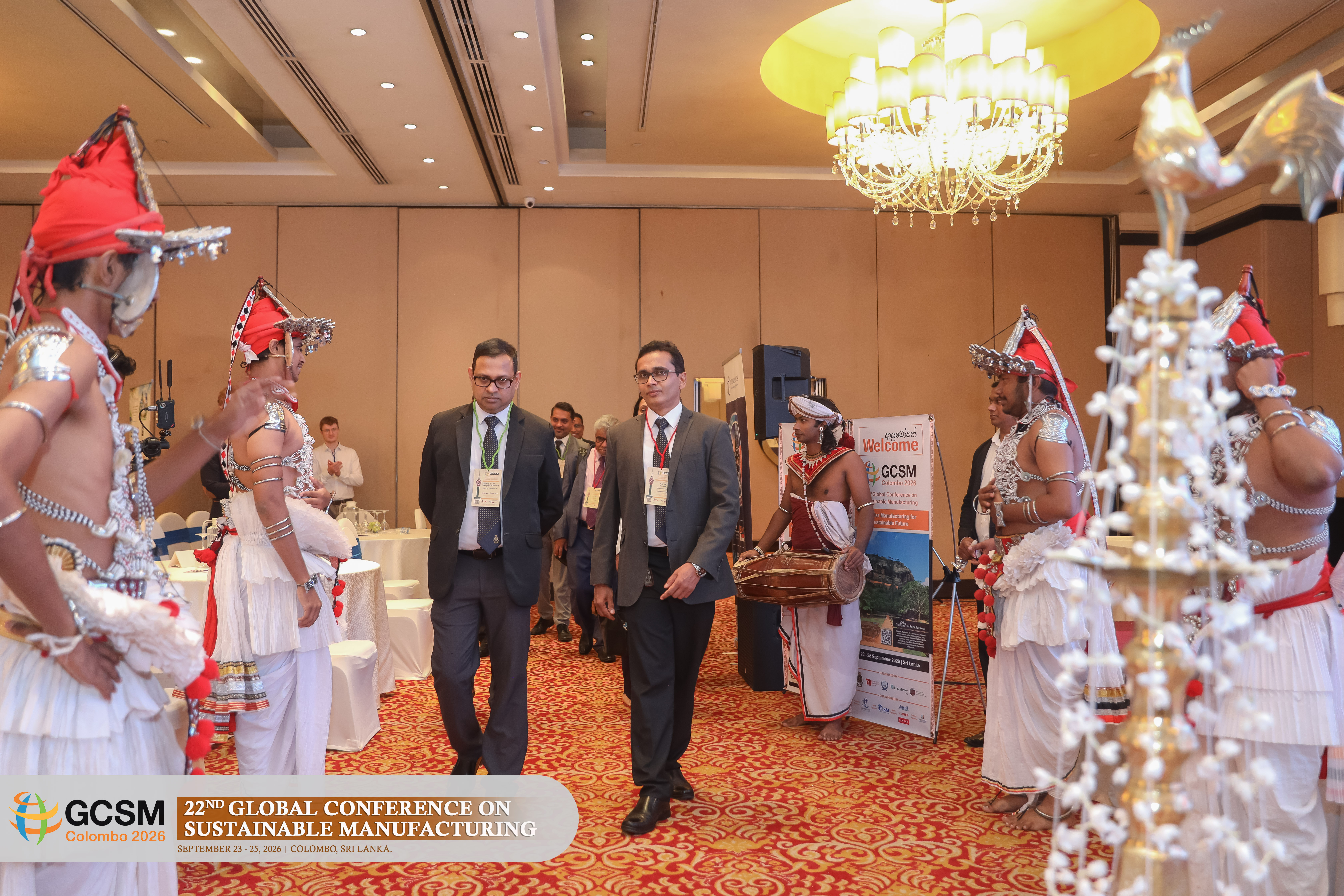
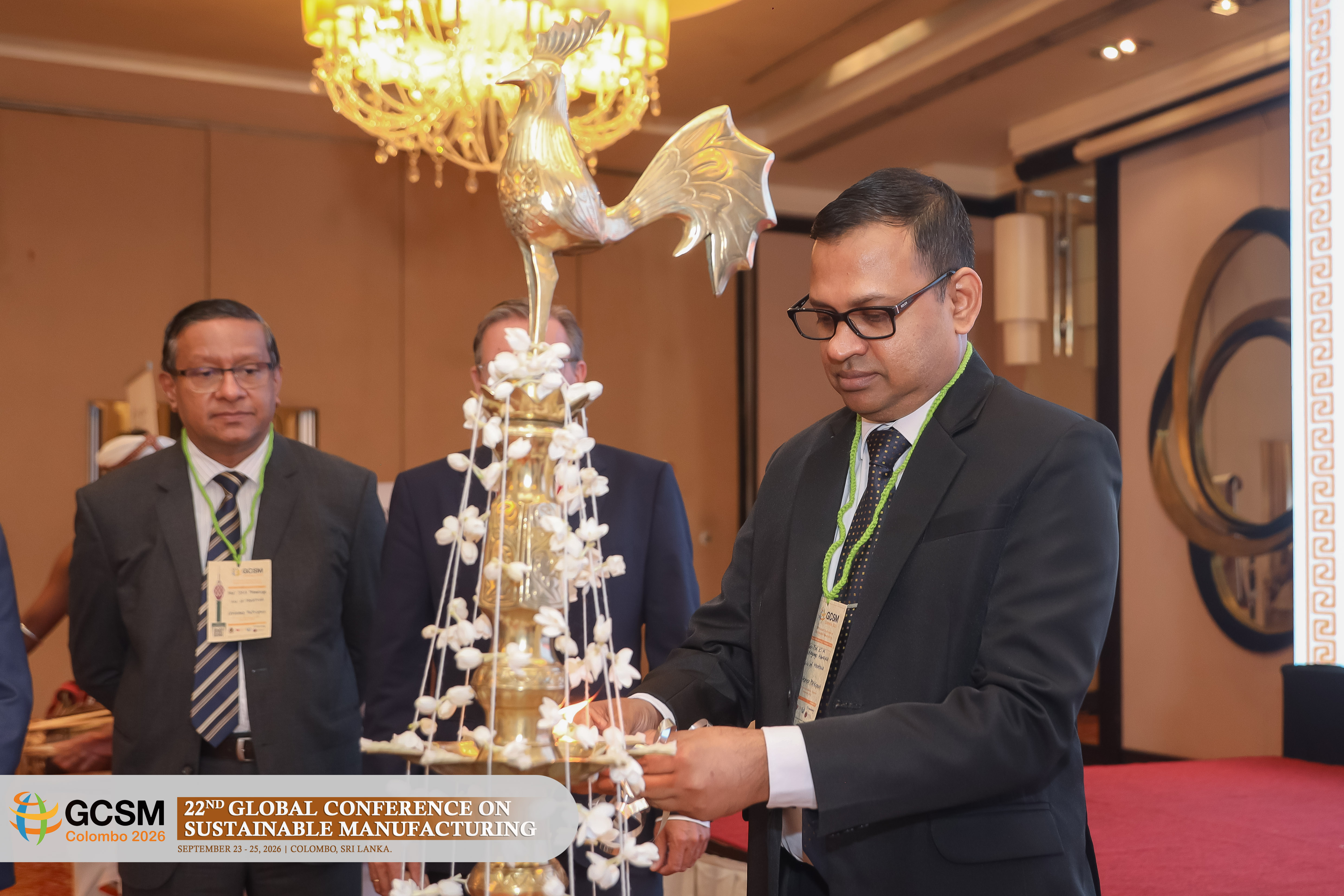
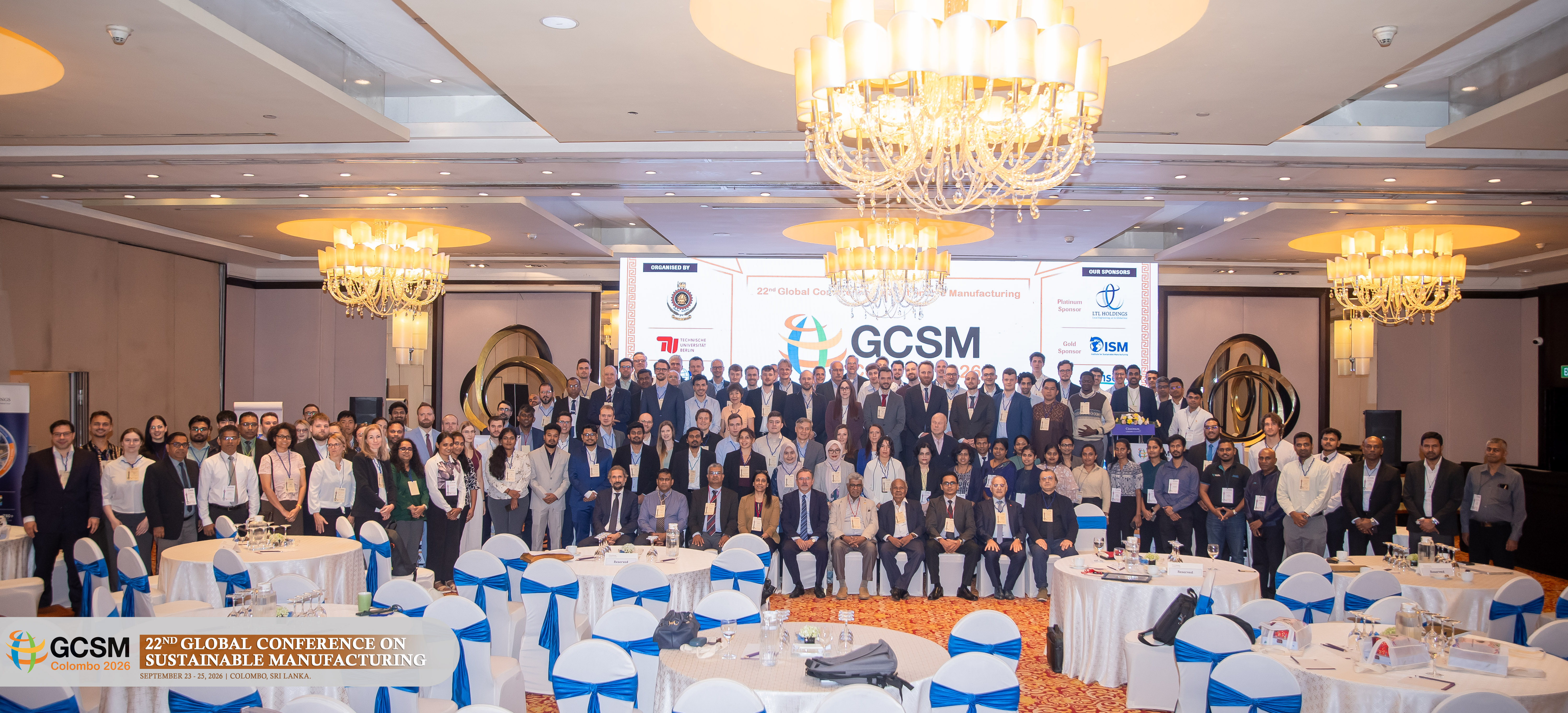
The 22nd Global Conference on Sustainable Manufacturing (GCSM 2026) was held in Colombo, Sri Lanka, from 23rd to 25th September 2026, marking an important milestone for the international sustainable manufacturing community and a significant achievement for Sri Lanka’s university sector. The conference was hosted by the University of Moratuwa in collaboration with the Technical University of Berlin (TU Berlin) and Fraunhofer IPK, with contributions from other Sri Lankan universities. It was the first time that the GCSM series was held in Sri Lanka.
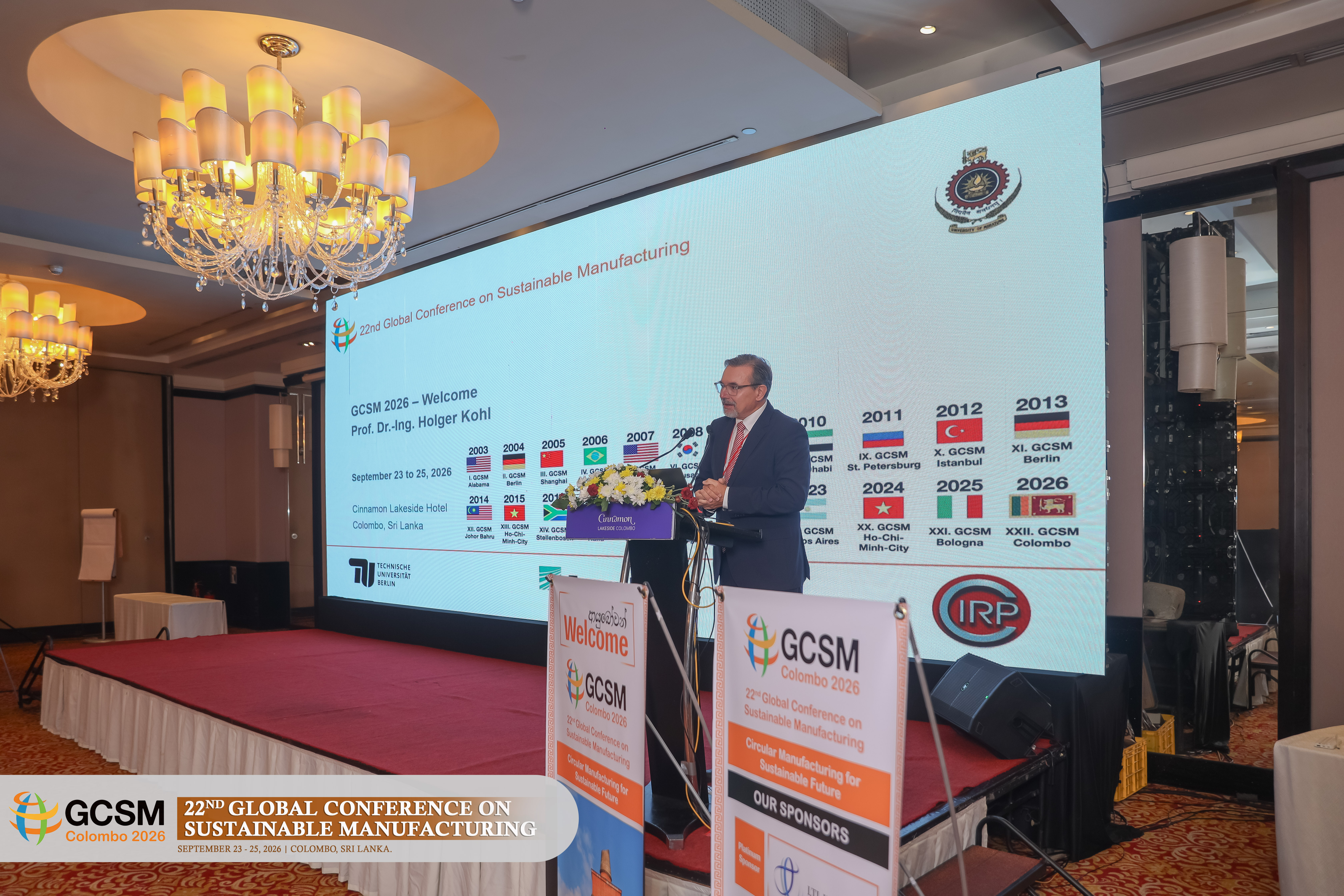
Held under the theme “Circular Manufacturing for Sustainable Future,” GCSM 2026 brought together academics, researchers, industry specialists, and professionals from around the world working in the field of sustainable manufacturing. The GCSM has been organised annually since 2003 and serves as a global forum connecting universities, research institutes, and industry in the field of sustainable manufacturing, with particular emphasis on manufacturing engineering solutions to environmental, economic, and social challenges. The conference was also supported by the International Academy for Production Engineering (CIRP).
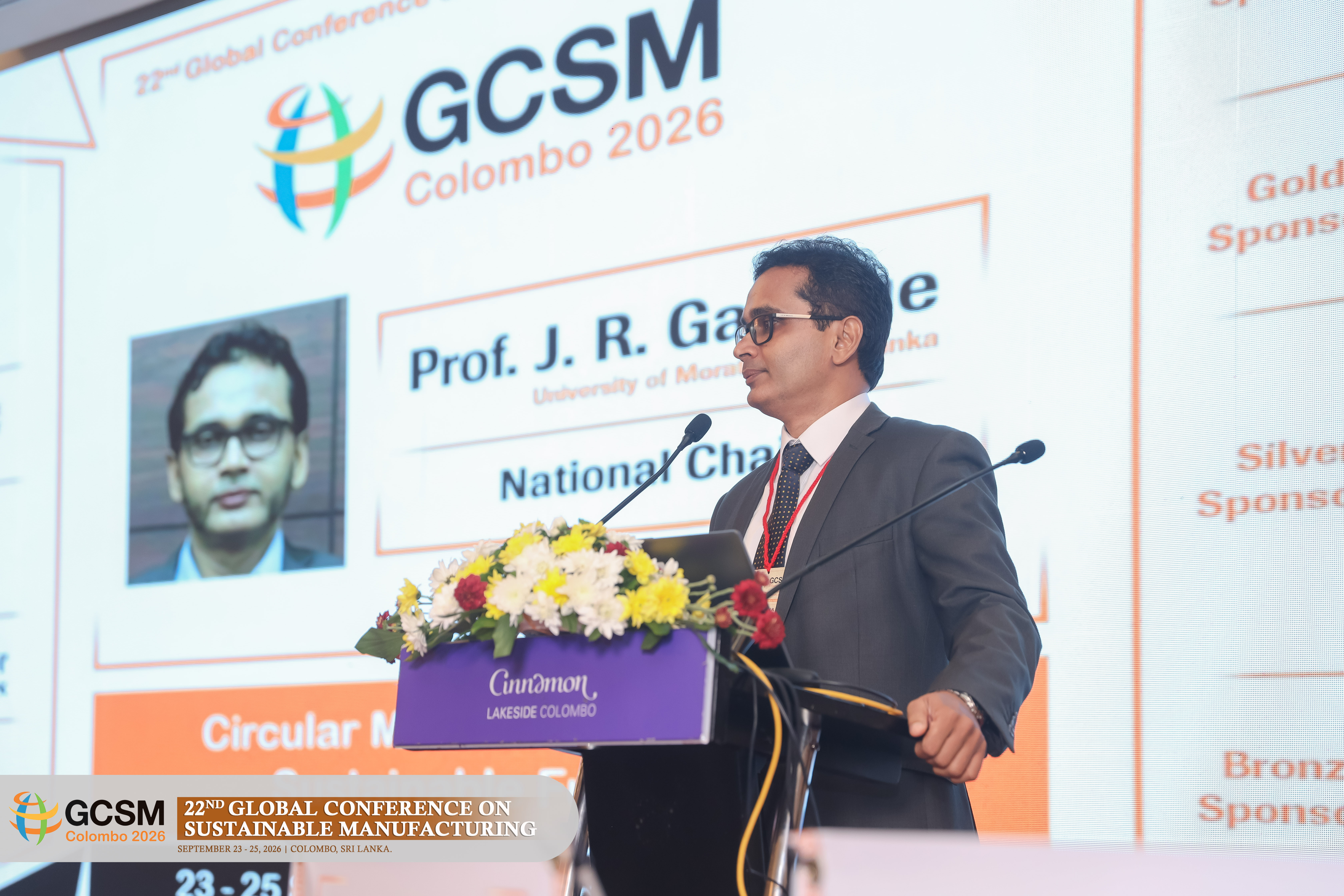
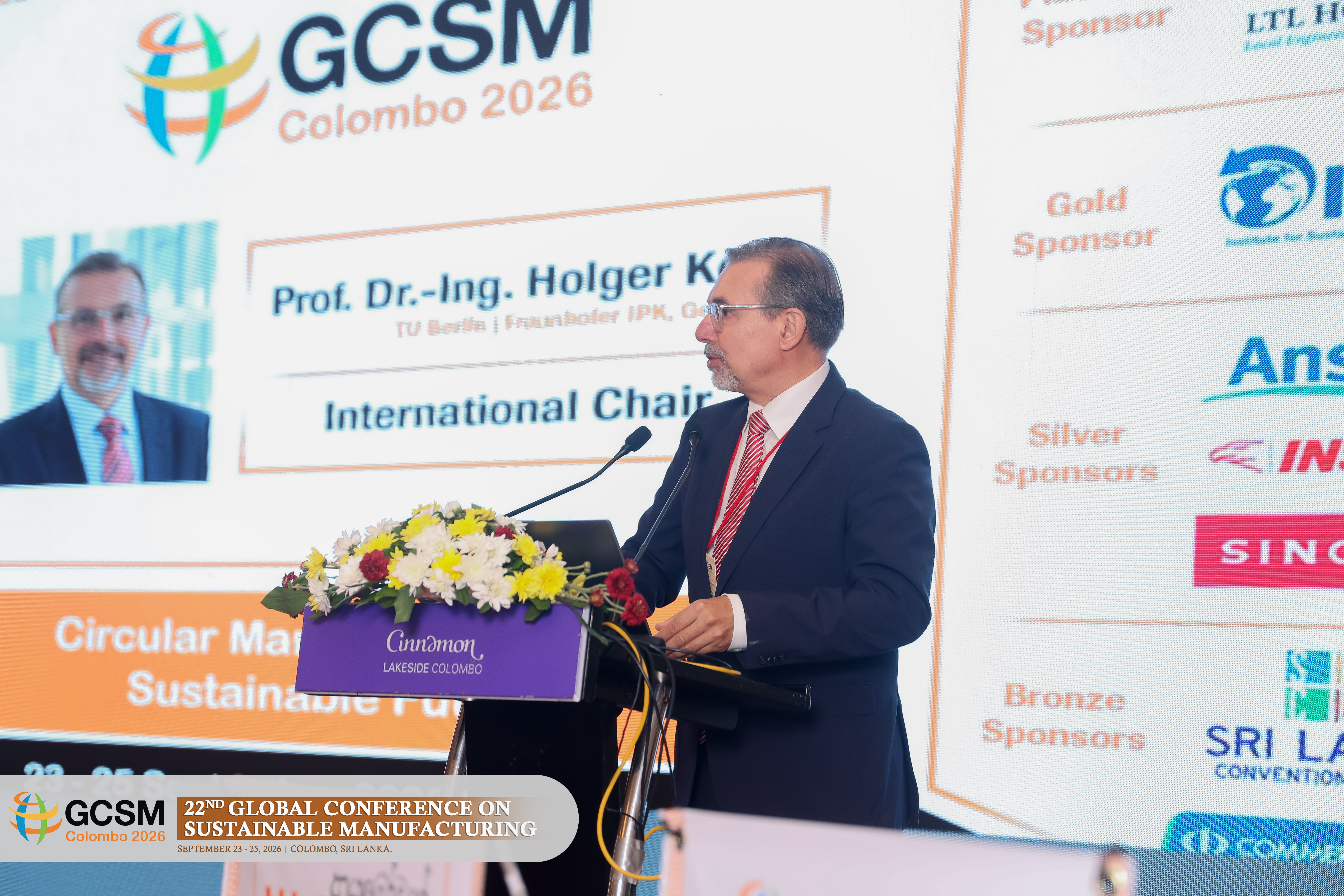
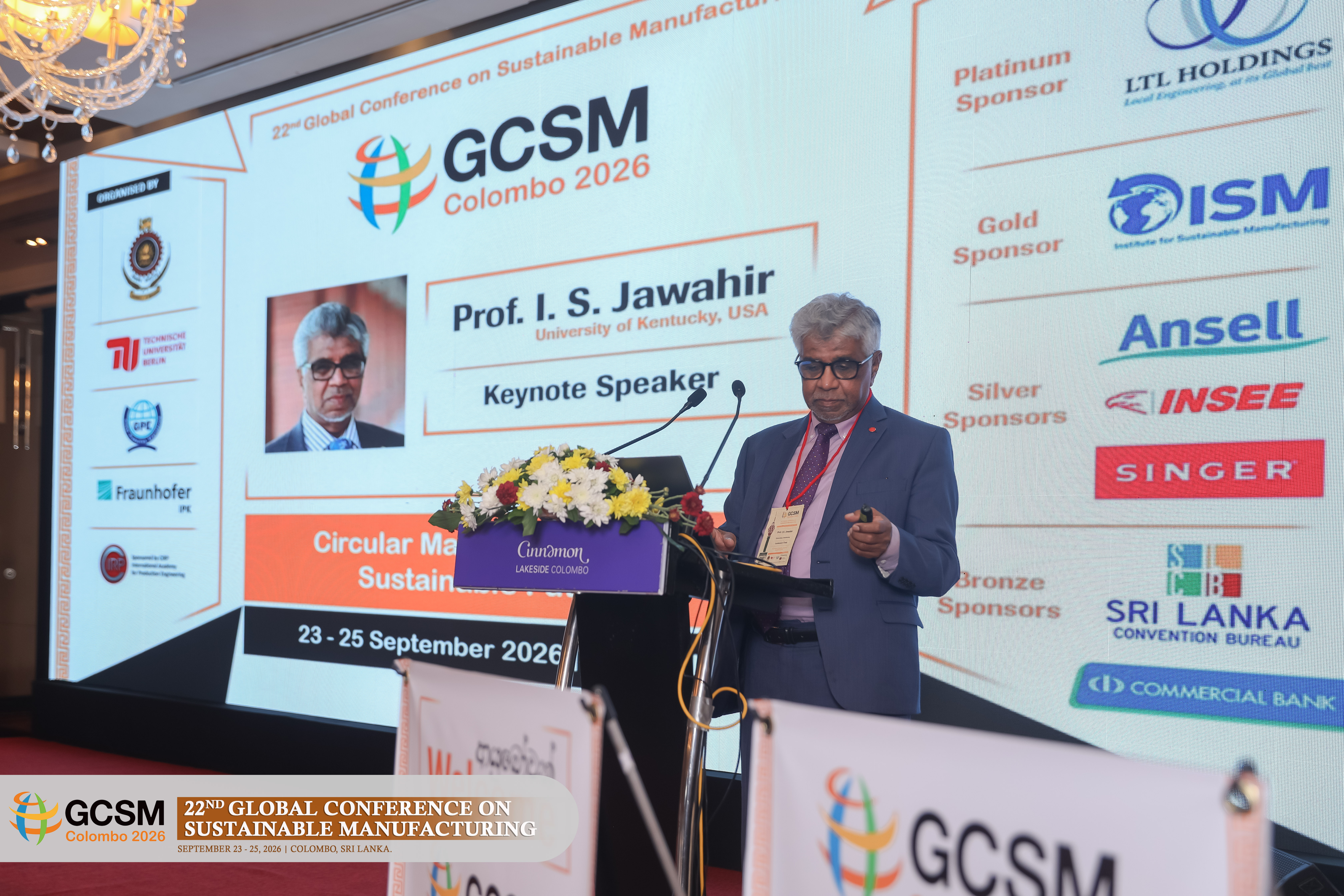
The International Chairs were Prof. Dr.-Ing. Holger Kohl, Prof. Dr.-Ing. Franz Dietrich, Prof. Dr.-Ing. Günther Seliger, and Prof. Fazleena Badurdeen. The National Chairs, responsible for hosting the conference in Sri Lanka, were Prof. J.R. Gamage and Dr. Asela Kulatunga. The renowned figure in sustainable manufacturing, Prof. I.S. Jawahir, served as the Honorary Chair.
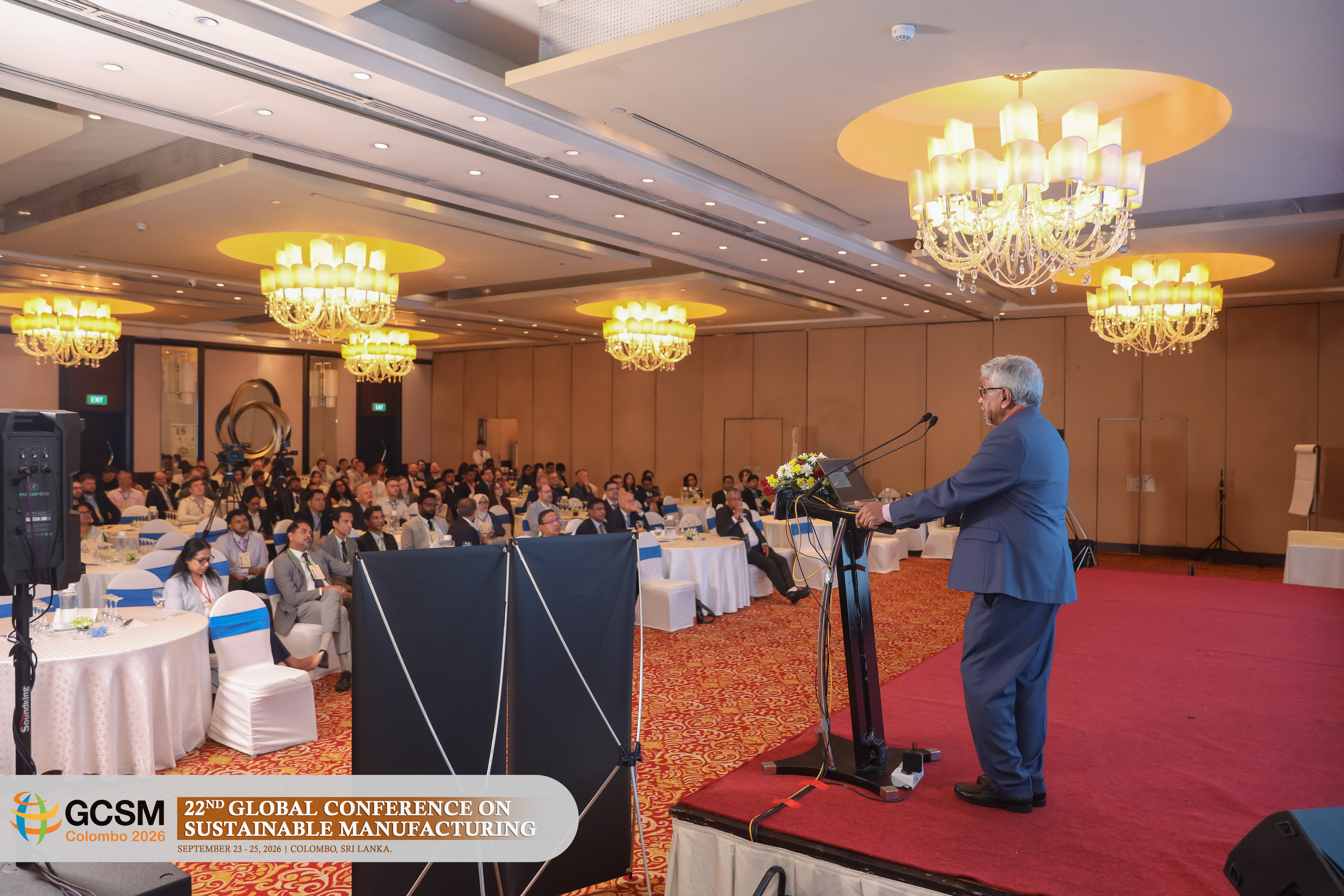
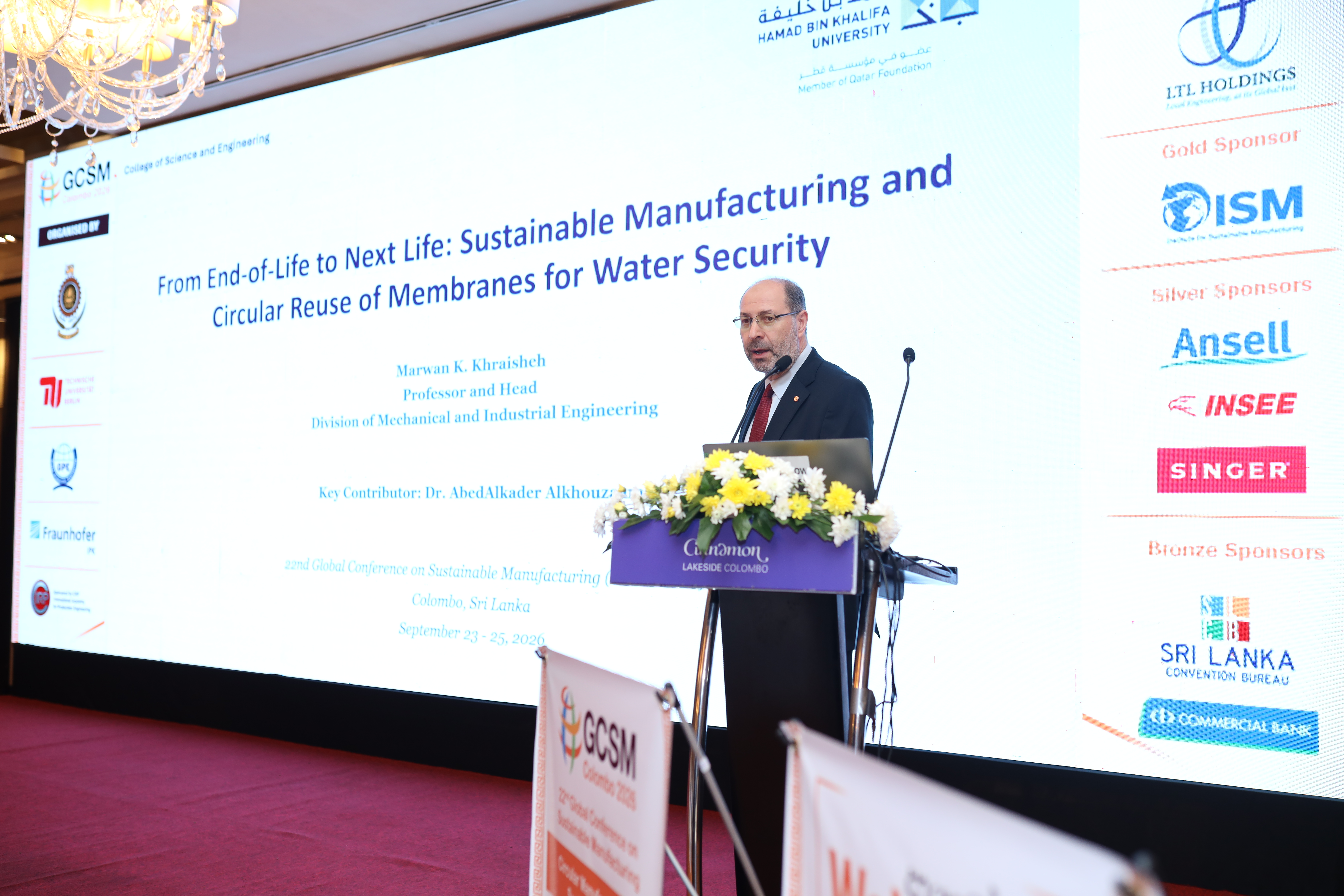
The conference was held at Cinnamon Lakeside Colombo, providing a fitting setting for an international gathering of researchers, academics, industry professionals, and other stakeholders. The programme comprised six keynote presentations, technical paper sessions, discussions, and opportunities for interaction and networking among researchers and practitioners.
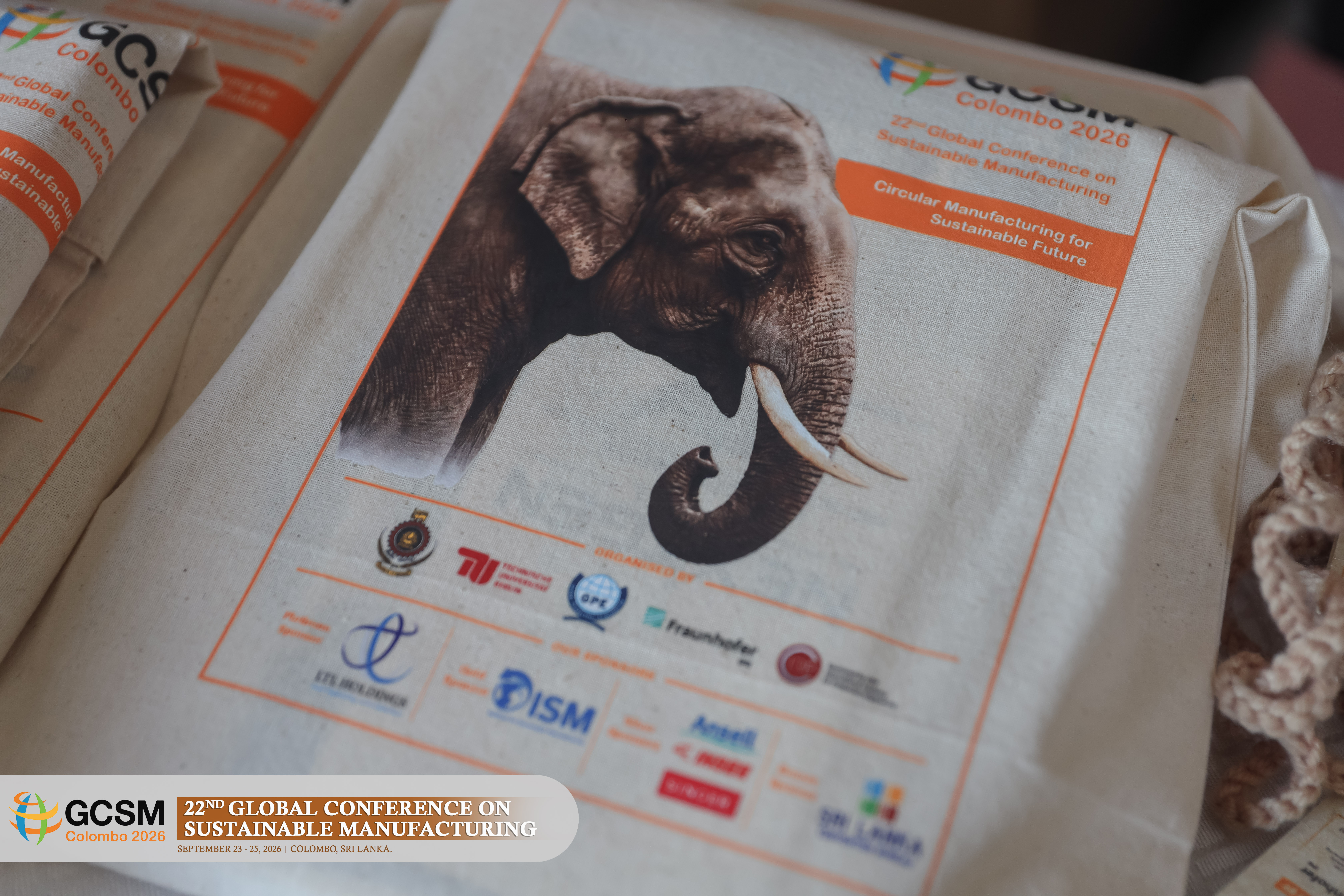
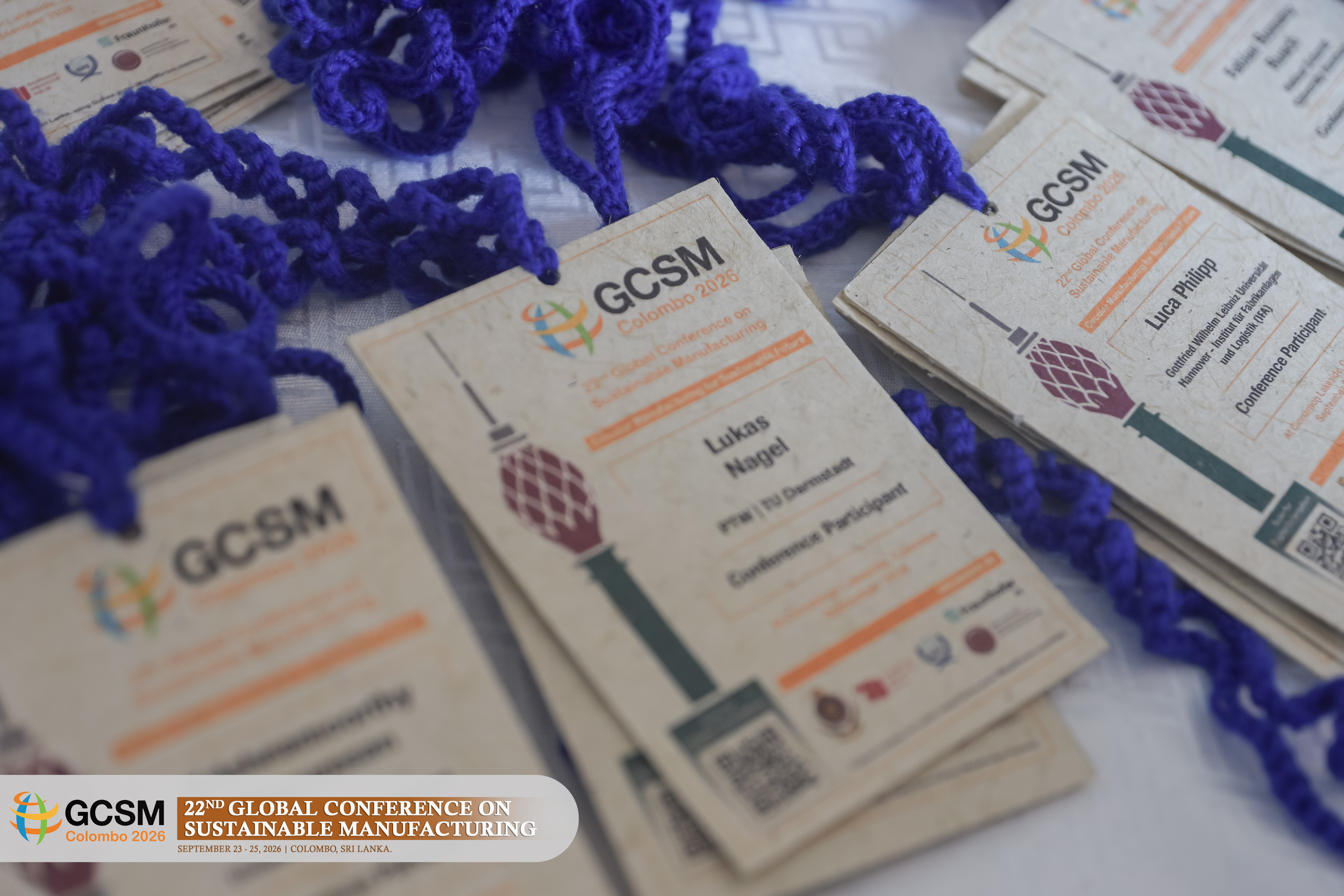
As part of its sustainability initiatives, the conference facilitated the planting of 22 trees in designated countries in honour of each keynote speaker, resulting in a total of 132 trees. A tree-planting certificate was presented to each keynote speaker as a token of appreciation. The conference pack was produced using Ali-Mana (Guinea Grass) paper, made from an invasive plant species in Sri Lanka. The paper was handcrafted by a small-scale domestic industry in Kandy, thereby supporting both sustainable material use and local livelihoods. In addition, each participant received a plantable pen embedded with seeds, allowing the pen itself to be planted after use and further contributing to the conference's environmental sustainability efforts.
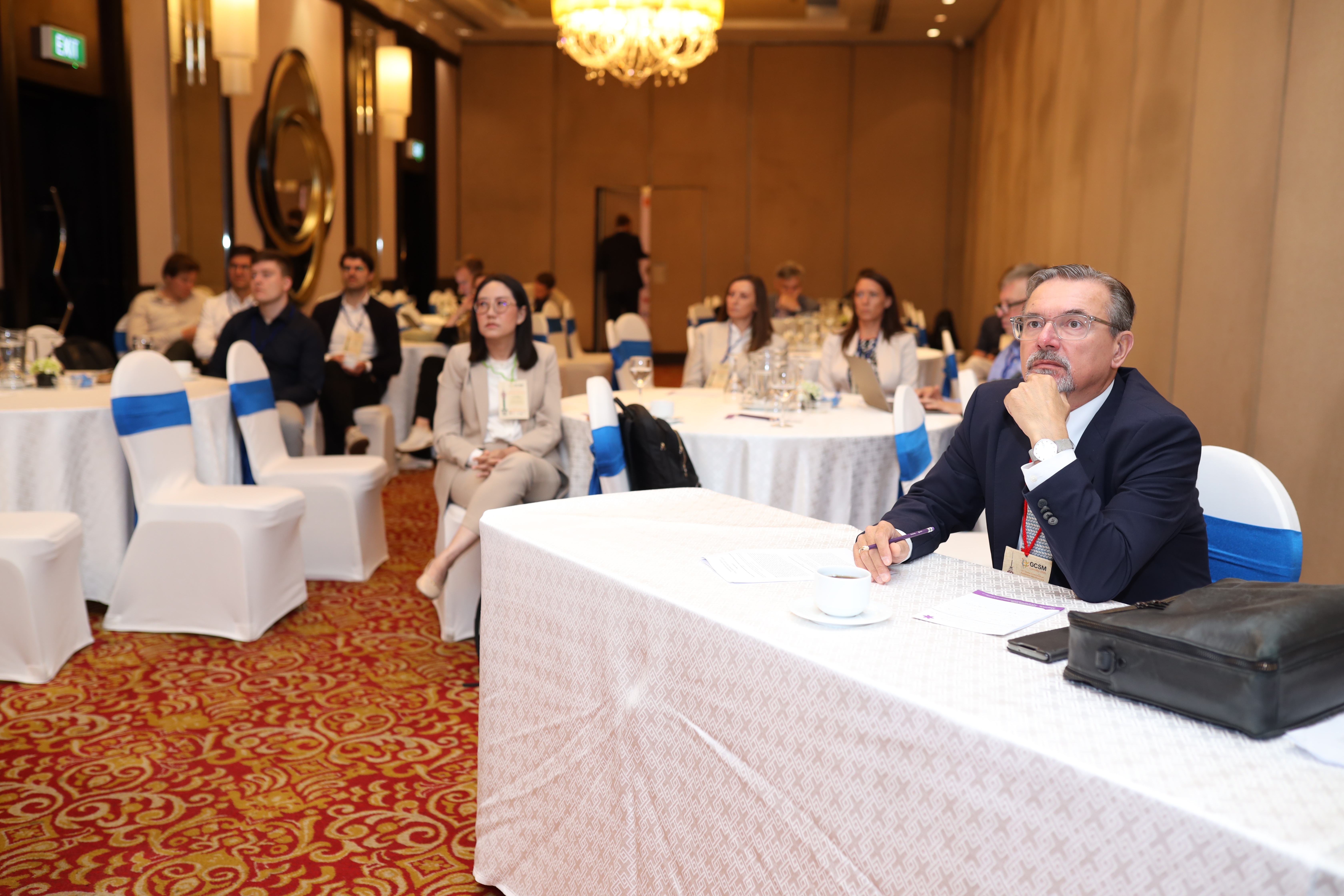
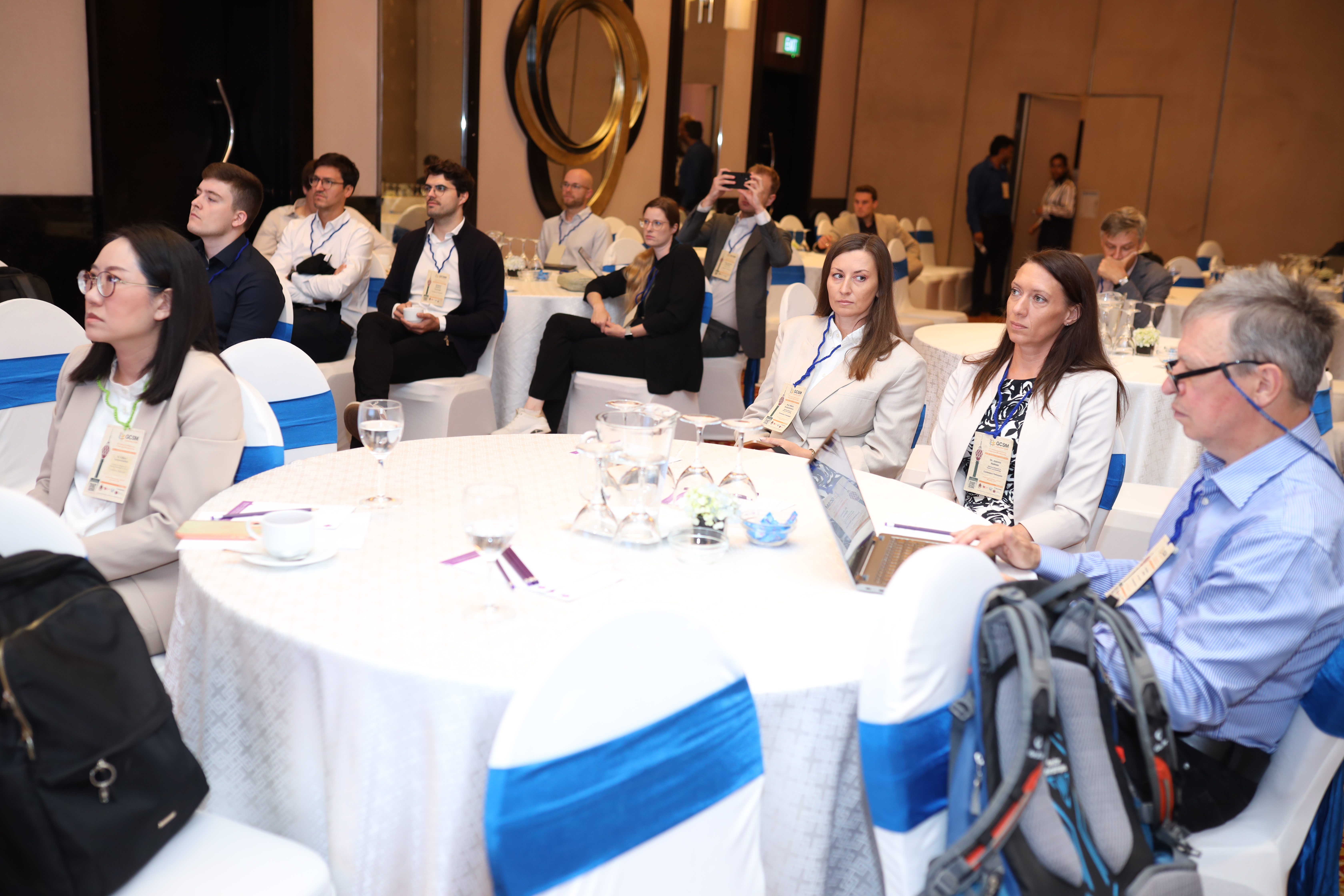
The international character of GCSM 2026 was particularly noteworthy. Participants and contributors from 27 countries were represented, with substantial participation from Europe, Asia, the Middle East, Africa, and other regions. The conference received more than 230 submissions, of which 140 papers were accepted following peer review by an international scientific committee. The accepted papers were presented in 25 parallel technical sessions, covering areas such as sustainable materials and products, sustainable manufacturing processes and systems, the circular economy, Industry 4.0, energy and resource efficiency, cleaner production, sustainable supply chains, and other aspects of sustainable manufacturing.
A dedicated session for industry personnel was also held, which was a distinctive feature of the conference. Approximately 40 key professionals from the manufacturing sector participated in this programme. It included a panel discussion led by the Delegation of German Industry and Commerce in Sri Lanka (AHK Sri Lanka), with panellists including the Chairman of the Export Development Board (EDB). The discussion focused on the challenges and opportunities facing Sri Lankan industry in relation to sustainable manufacturing regulations and requirements in Europe. In addition, a workshop and a series of industry-focused technical presentations were conducted to engage industry stakeholders and create a positive impact on the Sri Lankan manufacturing sector in the context of sustainable manufacturing.
The conference programme was further strengthened by industry visits. Participants had the opportunity to visit Ansell and Noyon Lanka at the Biyagama Export Processing Zone, providing exposure to contemporary manufacturing practices and demonstrating how sustainability can be integrated into industrial operations.
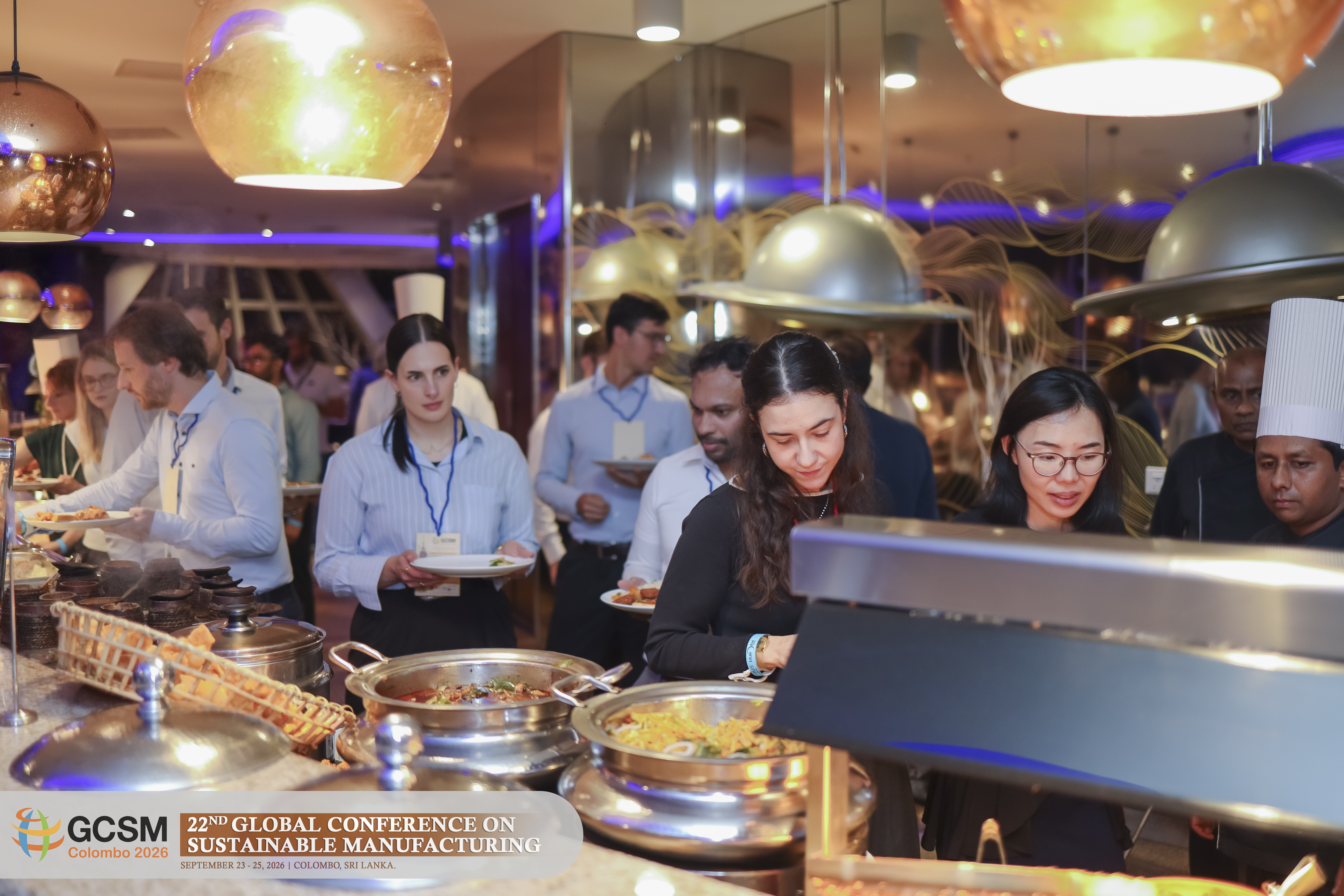
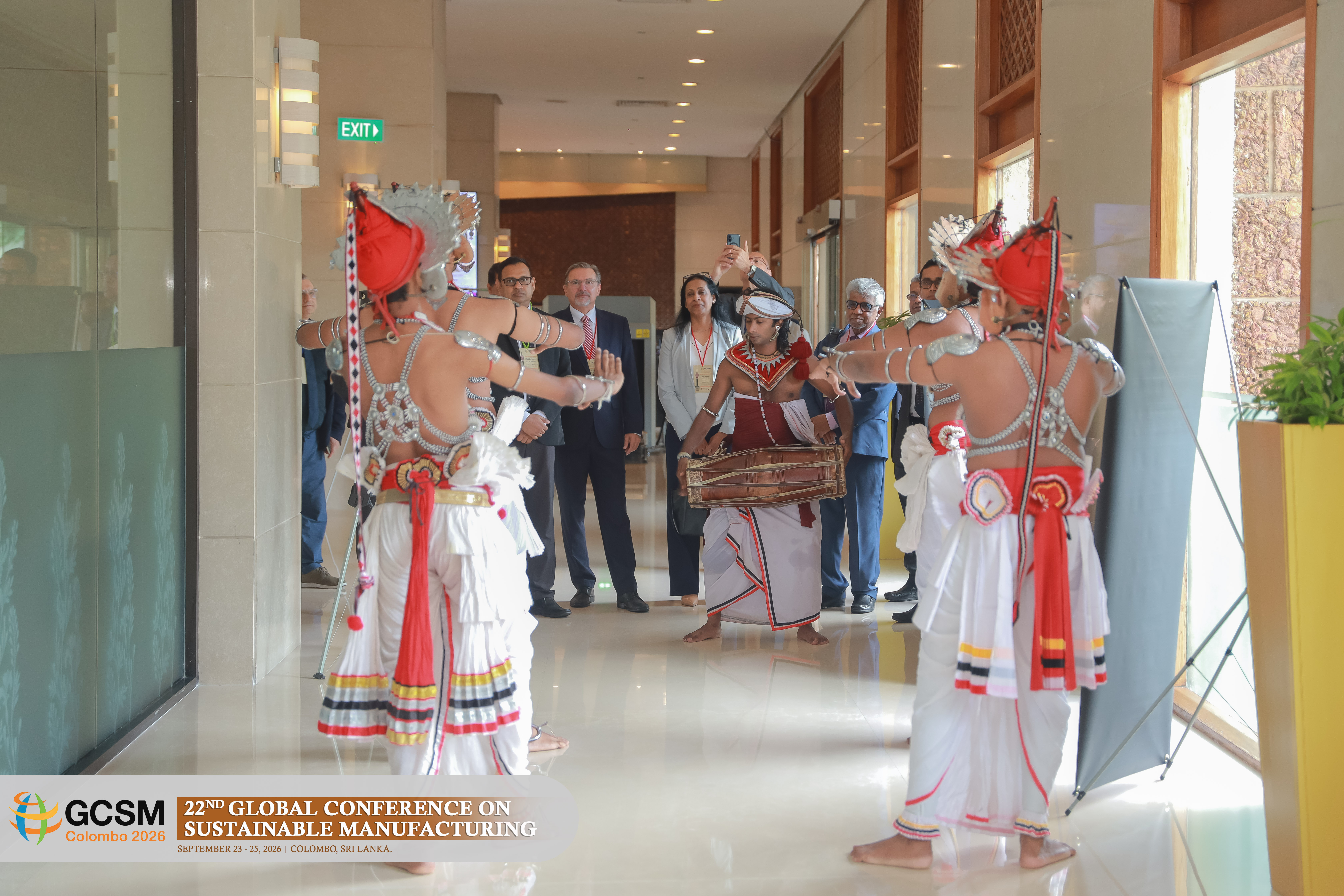
The conference also provided a valuable social and cultural dimension. The conference dinner was held at Blue Orbit, the revolving restaurant at the Colombo Lotus Tower, giving international delegates an opportunity to experience Colombo from one of its most distinctive landmarks while engaging in informal interaction and networking. Furthermore, a Colombo city tour organised on the final day provided international delegates with an opportunity to experience the city and gain a glimpse of its cultural and urban attractions.
The successful hosting of the 22nd Global Conference on Sustainable Manufacturing in Colombo has consequently enhanced Sri Lanka’s visibility within the international sustainable manufacturing research community. It also demonstrated the capacity of Sri Lankan universities to successfully host a major international scientific conference involving researchers, industry specialists, and leading academic and research institutions from around the world.