Three distinguished Sri Lankan academics from the fields of History, Textile and Costume Design were officially nominated by the Ministry of Buddhasasana, Religious and Cultural Affairs, Government of Sri Lanka, to represent Sri Lanka at the SAARC Regional Seminar on “Interpreting Shared Heritage: Cross-Cultural Narratives in Museums in the SAARC Region.”
Professor Priyanka Virajini Medagedara Karunaratne and Professor Gayathri Madhubhani Ranathunga, Professors in the Department of Textile and Apparel Engineering, University of Moratuwa, together with Professor Rohitha Dasanayaka, Professor in the Department of History, University of Peradeniya, participated as the official Sri Lankan nominees at this regional heritage seminar.
The three academics presented a joint research paper entitled “Establishing the Ehelepola Walawwa Wax Museum in the UNESCO Heritage City of Kandy, Sri Lanka: The Nation’s First Wax Museum as Repository and Communicator of Royal Costume Heritage.” Their presentation highlighted the transdisciplinary research, historical interpretation, textile development and costume design processes undertaken to establish the museum as a repository and communicator of Sri Lanka’s royal costume heritage.
Transdisciplinary Reconstruction of Royal Costume Heritage
A significant component of this national project was the research-led reconstruction and development of historical costumes for 18 royal and elite figures represented in the wax museum. The project adopted a transdisciplinary research approach, bringing together historical scholarship, textile and costume design, textile science, material knowledge, traditional craftsmanship and museum interpretation.
The research moved beyond conventional disciplinary boundaries through direct knowledge exchange and collaborative problem-solving with traditional textile weavers, jewellery makers and footwear makers. Their embodied and empirical craft knowledge played a vital role in translating historical evidence into physically producible, technically feasible and historically grounded costumes and accessories.
More than 200 Kandyan-era temple murals, together with museum collections, archival images, historical literature and other visual and material sources, were critically examined to establish historically grounded silhouettes, draping methods, textile structures, surface characteristics, jewellery, footwear and accessories. These findings were subsequently translated into design solutions and tested through continuous collaboration with skilled traditional craftspeople.
The Textile and Costume Design team followed an iterative process of research → concept development → textile development → costume development → redesign → recraft → revalidation. Continuous consultations among historians, designers and traditional artisans enabled the team to negotiate between historical evidence, material availability, traditional making techniques, technical feasibility and the physical requirements of the wax figures. The final costumes were approved when historical accuracy, craft knowledge and practical feasibility converged.
The project resulted in the development and production of 63 costume components, 21 types of specially developed textiles, more than 50 pieces of jewellery, 14 pairs of footwear, and a range of additional accessories required to complete the representations of the royal and elite figures.
The textile making process involved working directly with traditional handloom weavers in the Central Province, Kandy to interpret historically informed structures, colours, patterns and material qualities. Similarly, jewellery makers and footwear makers contributed their specialist knowledge and traditional skills to develop accessories that complemented the historical character of each representation.
This transdisciplinary process brought academic knowledge and traditional craft knowledge together as complementary forms of expertise. It demonstrated that heritage reconstruction can move beyond simply reproducing the visual appearance of historical dress to recovering and communicating the materials, techniques, craftsmanship, cultural meanings and embodied knowledge associated with Sri Lanka’s royal costume traditions.
Academic Contribution to National Heritage Development
This significant national project demonstrated how academics can actively contribute to national development and cultural heritage preservation through generous knowledge sharing, transdisciplinary collaboration and hands-on engagement. Through their research expertise and professional knowledge, the academics contributed to visualizing Sri Lanka’s past costume traditions through historically grounded and meticulously crafted costumes, textiles and accessories.
The project was undertaken with a strong commitment to the preservation, advancement and international communication of Sri Lanka’s cultural heritage, without monetary remuneration to the researchers for their contribution to the project. Their involvement reflects a commitment to sharing academic expertise, research knowledge and professional skills for the benefit of the nation and future generations.
The researchers gratefully acknowledge the generous sponsorship of their airfare by the Hon. DiyawadanaNilame, Lay Custodian of the Sri DaladaMaligawa (Temple of the Sacred Tooth Relic), Kandy, which enabled their participation in the SAARC Regional Heritage Seminar in Nepal. They extend their sincere appreciation for this valuable support and for the recognition given to the importance of preserving and internationally communicating Sri Lanka’s royal costume heritage.
Sri Lanka at the SAARC Regional Platform
The seminar was organized by the SAARC Cultural Centre, Sri Lanka, in collaboration with the Ministry of Culture, Tourism and Civil Aviation of the Government of Nepal. It was held from 30 September to 1 October 2026 at Hotel Square, Lalitpur, Nepal, bringing together scholars, heritage professionals and cultural practitioners from across the SAARC region to explore shared heritage and cross-cultural narratives in museums.
The participation of the three officially nominated Sri Lankan academics provided an important international platform to present the Ehelepola Walawwa Wax Museum as a distinctive national initiative connecting history, transdisciplinary research, textile and costume design, traditional craftsmanship and contemporary museum communication.
The project demonstrates how Sri Lanka’s royal costume heritage can be researched, reconstructed, materially realized and communicated to contemporary audiences, while simultaneously sustaining links with the country’s living textile and craft traditions. It represents a significant contribution towards preserving and internationally communicating the rich material and intangible heritage of Sri Lanka’s royal costume traditions.
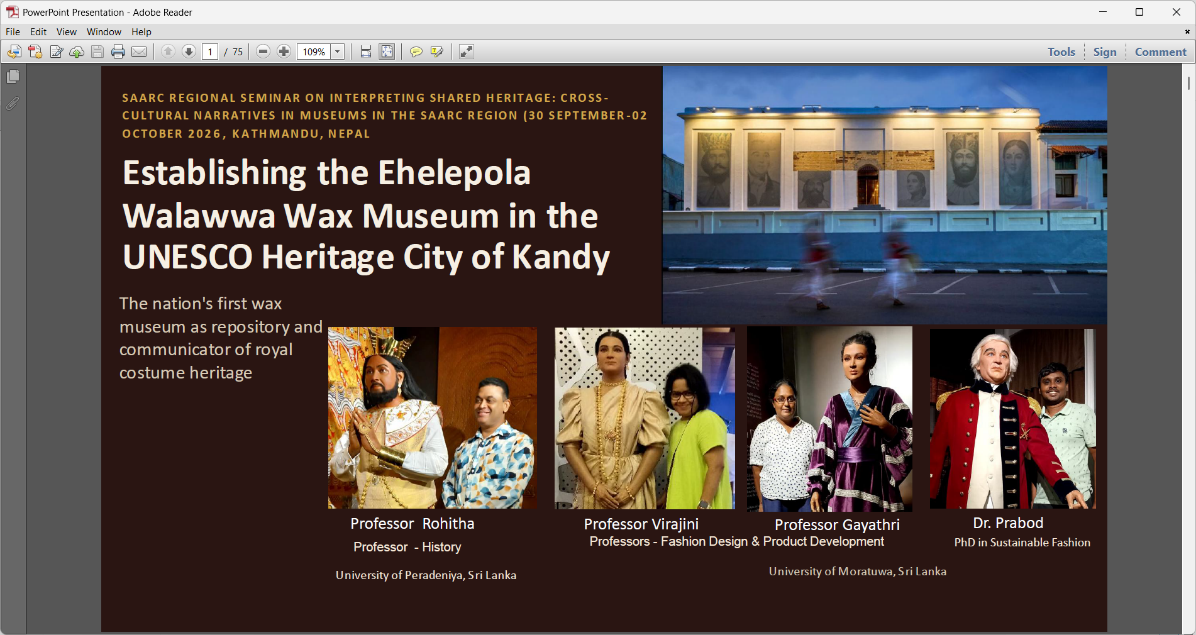 | 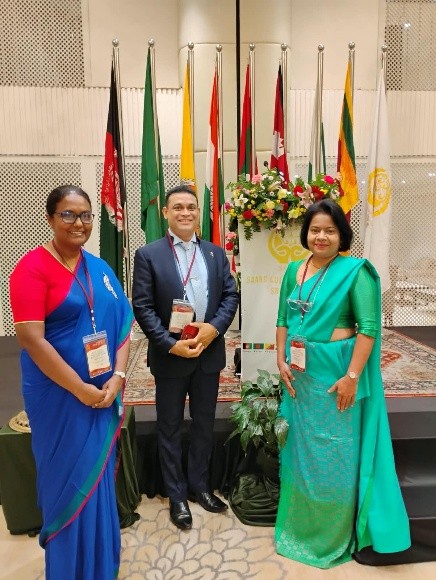 |
Opening slide of our presentation | First day (30th September) at the Hotel Square, Kathmandu |
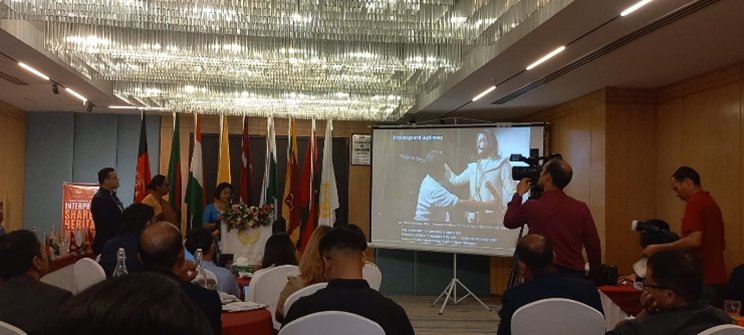 | |
Presentation | |
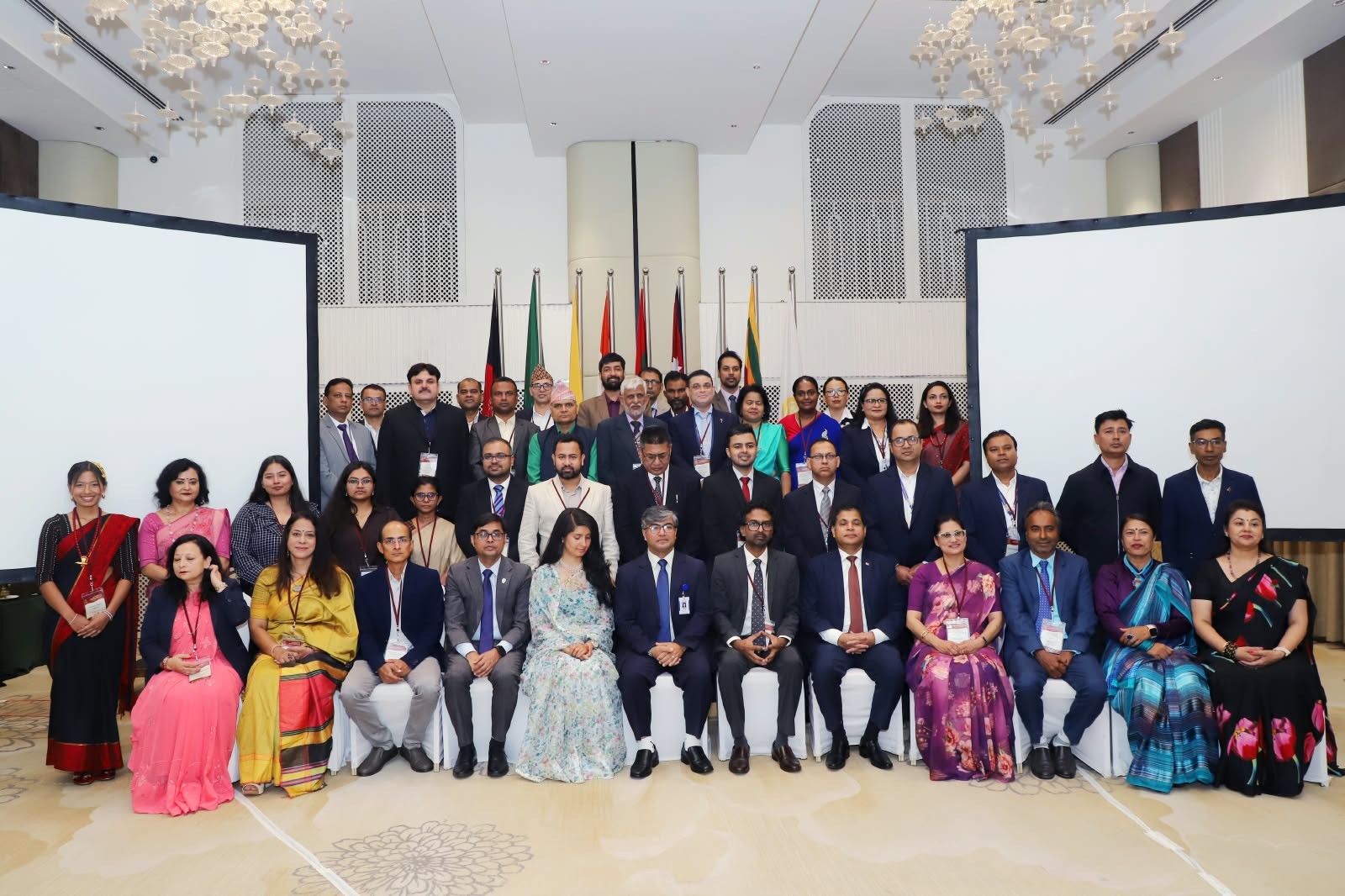 | |
Participants of SAARC countries | |
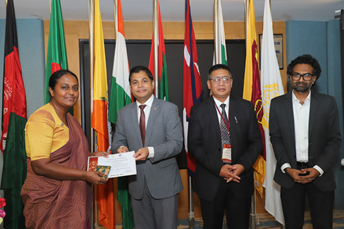 | |
Receiving a token of appreciation from the SAARC Secretariat, presented in the presence of the Secretary, Ministry of Culture, Tourism and Civil Aviation, Nepal, and the Director of SAARC. | |
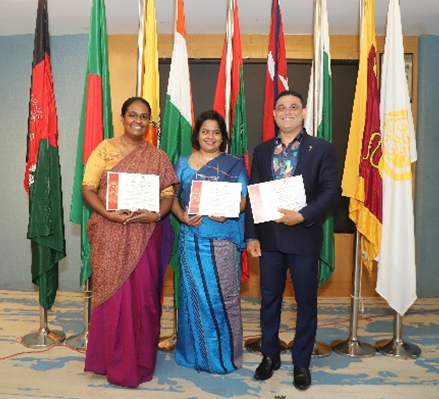
Professors Gayathri, Virajini, and Rohitha with Their Certificates of Presentation.
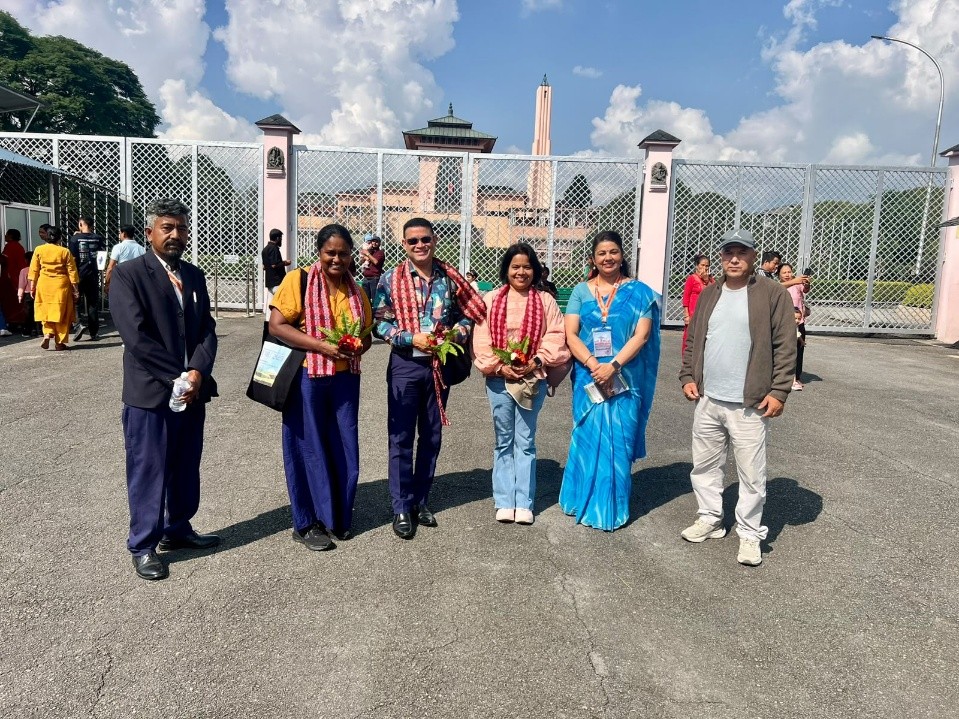
As official guests hosted by the Chief of the Narayanhiti Palace Museum, Kathmandu.